Feeds:
Posts
Comments

By Office Volunteer Paul Breen 

On the junction of Manor Mews and Cambridge Avenue, just off the Kilburn High Road in London, is the RSPCA Animals War Memorial Dispensary, a building dedicated to those animals that died in The First World War.  

Animals War Memorial Dispensary (UKNIWM 10995 ©English Heritage)

The Animals War Memorial Dispensary is an attractive 19th Century two storey building with shuttered windows to the upper floor and stone tablets either side of the front door. The tablets, which can be read by all who enter the building, record the fact that nearly half a million animals met their deaths during the First World War and that approximately three quarters of a million animals of all descriptions, including hundreds of dogs and carrier pigeons, were treated in France at RSPCA field hospitals.

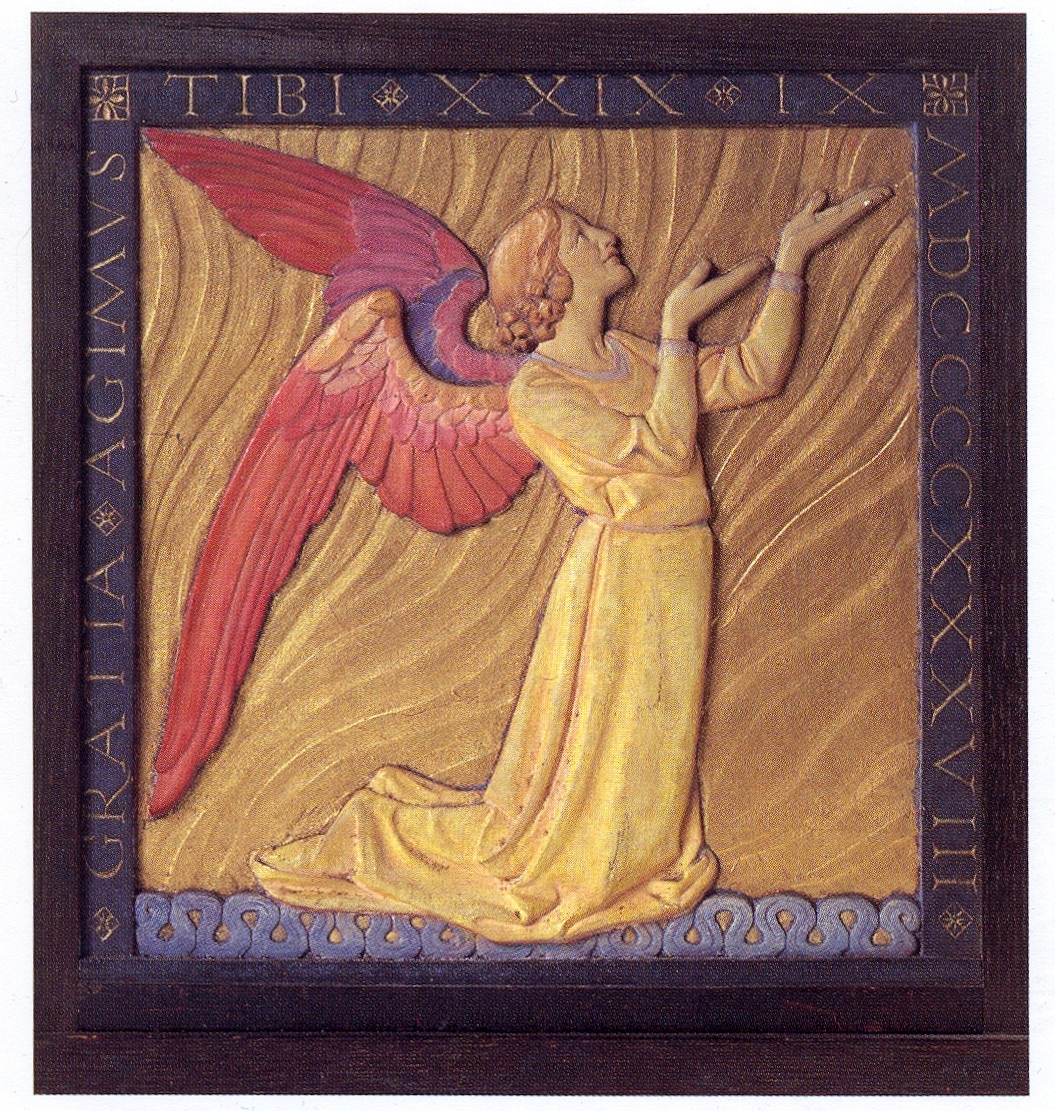
Above the front door is a large bronze plaque depicting the figure of winged Victory, holding wreaths in each hand, surrounded by pairs of animals including horses, elephants, dogs, oxen, mules, and camels. The plaque was the creation of Frederick Brook Hitch, FRSBS, who was also responsible for the National Submarine War Memorial (1922) on the Victoria Embankment and the statue of Charles Wesley (1939) at the Methodist Chapel in Bristol, as well as a number of other commissions world- wide. His brother, John Oliver Brook Hitch MC, was the architect responsible for the conversion of the building to an animal dispensary.

The dispensary was opened on 10th November 1932 by Frances Evelyn ‘Daisy’ Greville, Countess of Warwick: a well known animal lover, the Countess kept a menagerie of birds and animals on her estate at Easton Lodge near Great Dunmow in Essex.  

Animals War Memorial Dispensary (UKNIWM 10995 ©English Heritage)

In its opening year the dispensary treated over 6,000 animals and still functions today as a busy clinic for sick animals, fulfilling the RSPCA’s founding intention that it act as ‘a memorial that would benefit living animals’. It is now Grade II listed and is a unique building to the memory of animals killed in the First World War. The dedication of the building is made more poignant by the request it makes for us to show kindness and consideration to animals in the present day.

A Wish Fulfilled

This is an article by Derbyshire Fieldworker Roy Branson

Mention Derbyshire stately homes and most people will instantly think of Chatsworth, but there are many other historic buildings in the county.  One such is Kedleston Hall just outside Derby, home of the Curzon family and now in the care of the National Trust.  When the current house was built Lord Curzon did as many other landowners of the time - he removed the rest of the village to cottages out of his sight.  But one building that he did not move was the parish church which still stands next to the grand house.  Although the church was used by the Curzons, almost as a private family chapel, the church at the adjacent village of Mugginton became the venue for the rest of the village.  Today there is no longer a viable congregation at Kedleston and the church, All Saints’, is now in the care of The Churches Conservation Trust.  

Tablet to Capt the Hon William Curzon (©Roy Branson)

My principal voluntary work for UKNIWM is the survey of war memorials throughout Derbyshire and I recently visited Kedleston Hall and All Saints’ Church with Frances Casey, UKNIWM Project Manager, where we recorded several memorials new to the Inventory.  One of the memorials in the church is to 23 year old William Curzon who was killed at the Battle of Waterloo in 1815.  It comprises a white marble tablet with a black border painted onto the surrounding wall and an incised inscription which the guidebook describes as a ‘touching epitaph’.  Here, the inscription is reproduced verbatim: 

Sacred to the memory of WILLIAM CURZON,

4th. Son of Lord Scarsdale, late Capt. in the 69th. Ft. & D.A.A.G.

A Youth of fairest promise!

Whose professional merit, amiable qualities, & private worth,

Had distinguish’d Him as a Soldier, endear’d Him to his Family, Friends, & Comrades.

He enter’d the Army at the age of 16,

Appointed to an Ensigney in the 9th. from the R. M. College,

And having honorably served throughout the War in the Peninsular,

And already bled in the cause of Nations,

Fell alas! fighting with devoted gallantry,

On that day of triumph & tears, which seal’d their Deliverance;

Being slain in the Battle of Waterloo June 18th. 1815, in his 24th. year.

His Country will record His Name in the list of the Brave.

To preserve It on the Spot where its Remembrance will be most precious,

This tablet is raised by his affectionate Parents,

Who deploring His loss, with their surviving Children,

Bow to the Divine Will & repose in the blessed belief,

That He has exchang’d His Laurels, for a Crown of Glory,

The Meed of His Virtues.

The seventh line from the bottom is of particular interest: “His Country will record His Name in the list of the Brave”. By recording his memorial in the Inventory I think I have fulfilled his parents’ wishes after 196 years. This is why I record war memorials.

This is a blog by Project Manager Frances Casey

A beautiful hand-illustrated First World War Roll of Honour from the Lake District village of Levens has been discovered in an attic in the village. The Menin Gate, Menin Road and Arras Road are all illustrated above the inscription to men of the village, and a detailed scene from Railway Wood, Ypres, 1917 can be seen below the names.

Levens Roll of Honour (ukniwm 61491, ©Stephen Read)

When the Roll came to light, the Levens Local History Group set about trying to find out more about it and the men commemorated, but so far the mystery has deepened. Most of the men named were in the Border Regiment and according to the Group’s research it appears that this regiment did not play a prominent part in Ypres in 1917, and the men are not commemorated on the Menin Gate which is a memorial to the missing of Ypres, so why choose these illustrations for the Roll?

The illustration of the Menin Gate does help date the Roll of Honour though, as the Gate was unveiled in 1927, so the Roll must have been created around or after this time. It is signed Jackson Art Studio on the right hand lower corner but, as yet, the Levens researchers have not found any information about this company. If you have any ideas or come across anything in your research to help solve these mysteries let us know and we will pass on your thoughts to the Levens Local History Group, who are continuing with the search and would welcome any leads.


Blog by volunteer fieldworker Gordon Amand

A memorial from the Great War has been found while clearing out a cellar in Ross-on Wye. It commemorates the life of Wilfrid John Massey Lynch, Lieutenant in the 3rd Dragoon Guards who was killed in action on 4th April 1918 at the battle of the Avre, the Somme, France. He was 25 years old.

Rediscovered Plaque to Wilfrid Massey Lynch (©Gordon Amand)

The existence of this memorial has been known for many years, as it was originally in an old church in Ross-on-Wye, Herefordshire and probably erected there in the 1920s. It disappeared sometime after the new church of St. Frances of Rome was built in 1931.

There are several other memorials to Wilfrid. One is coupled with his brother-in-law, Lieutenant F. T. Harris in All Saints Church in the Trees at Bishopswood, which is a few miles from Ross-on-Wye. Another exists in St Joseph’s Church, Blundellsands, Liverpool. He is also remembered on the Pozieres Memorial, Somme, France. The recently discovered memorial is a brass plaque measuring 24 inches x 12 inches (610 x 305 mm) and has been recorded by UKNIWM. I hope to get the plaque refurbished and installed in St Frances of Rome Church, and also have it rededicated and blessed at a ceremony this year.  

Wilfrid was born on 28 September 1893 in Seaforth, Liverpool. He went to Stonyhurst School near Clitheroe in Lancashire. His father expected him to work in banking which he did for two years with the Bank of Liverpool. Commercial life however did not suit him, and he decided to move south and took up a job as a trainee farmer at Great Howle, near Ross-on-Wye where he met the farmer’s daughter Gwendoline Harris. They got married in July 1914, and soon after they sailed for south east Australia where Wilfrid set up a fruit farm. Their only child, Lisle was born here. In 1916 he decided to return to Liverpool and enlisted in the army. He got a commission with the 3rd Dragoon Guards, as a Lieutenant to serve King and Country.  He was wounded with shell shock in 10th January 1918, and later rejoined his regiment on the 29th January 1918. He was killed on 4th April 1918. 

I knew his daughter Lisle, and her two cousins, who gave me a lot of information about Wilfrid.  Other information has been obtained from The Stonyhurst Association and the National Archives. Lisle never married and her two married cousins did not have any male children, so the family name of Massey-Lynch will be lost after this generation.

Blog by office volunteer Richard Graham

The statue of Earl Mountbatten of Burma  just off Horse Guards Parade was unveiled by the Queen on 2 November 1983. Three days later ‘The Times’ published a letter from the author and broadcaster Ludovic Kennedy, writing from the Army and Navy Club, in which he said the statue was ‘…impressive but flawed.’ The earl could have been shown with binoculars, as if on the bridge of his ship, or in ceremonial dress, ‘But… on what occasion would one have expected to meet him wearing binoculars, aiguillettes*, the Order of Merit and the Order of the Garter, all at the same time?’

Earl Mountbatten of Burma (©Loz Flowers)

Kennedy (1919-2009), knighted in 1994, had served in the RNVR from 1939 to 1946. His father, Captain E C Kennedy, was killed in 1939 while commanding the Armed Merchant Cruiser HMS Rawalpindi in action against the German battlecruisers Scharnhorst and Gneisenau.

On 8 November, The Times printed the answer to Kennedy’s question from one of the assessors who selected the design for the statue, no less a person than the former Chief of the Defence Staff, Admiral of the Fleet Lord Lewin, who wrote, ‘The short answer is on board her Majesty’s Yacht Britannia at her Majesty’s silver jubilee review of the Fleet in 1977, when in addition he was wearing his medals and a sword. There may have been other occasions, but I can vouch for that one.’ In his opinion, Franta Belsky the sculptor had ‘… perfectly captured both the form and the spirit of that great man.’

* Ornamental braided cord worn with uniform.

By Jane Furlong, Project Coordinator

Have you ever wondered how the Blitz affected your family? What role did your ancestors play to help win the war on the home front? And what effects of the raids can still be seen around us and in our lives today? If you are planning ahead and wandering what to do on 6th November why not come along to the Family History Day at the Imperial War Museum. I will be giving a talk about Blitz memorials  and you will get an opportunity to speak to a range of Museum experts and other organisations about starting and continuing Family History Research. You can bring along any documents, photographs, medals or other objects relating to family history in the twentieth century and we will try to help you learn more about them. The Museum’s Conservators and members of the Institute of Conservation (ICON) will also be on hand to advise on how to look after these precious family heirlooms.

A series of special lectures  offering more in-depth advice on how to find out more about your family will also be taking place – including one by me on Blitz memorials - and there will be the opportunity to visit the Explore History Centre, a specially-designed public space where anyone can drop in for free and discover how the Imperial War Museum’s vast collections could help to uncover their past.

So come along. It would be great to see you!

The Mitford Men

This is a blog by Project Officer Frances Casey

The Mitford name is most famously associated with the six extraordinary daughters of David Freeman Mitford, 2nd Baron Redesdale (1878-1958). They were Nancy, the author of witty tales of family life; Pamela, whose love of farm life led John Betjeman to refer to her as the ‘Rural Mitford’; Diana the beauty and wife of the heir to the Guinness family, whom she later divorced in favour of Oswald Mosley, the leader of the British Union of Fascists; Unity whose torn love between Hitler and her country led her to shoot herself at the outbreak of the Second World War; Decca the communist, who tried to donate her share of the family’s remote Scottish island, Inch Kenneth, to the Communist Party; and Deborah (Debo), the only surviving child and current Duchess of Devonshire. It would be understandable to assume that the stories of the male members of the family could not compare, but the family’s war memorials tell us an equally interesting story of the Mitford men.

Pew to Maj C Freeman Mitford (ukniwm 31692) and tablet to Major T Mitford (ukniwm 31693), ©ukniwm

In St Marys Church in the Oxfordshire village of Swinbrook, memorials to the Mitford family are mounted on the walls and, on closer inspection, the family pews can be found. One of the pews was donated by David Freeman Mitford from his winnings on the Grand National in 1918 and was used by the family during services. The other is an ornately carved oak pew, dedicated to David’s elder brother Major Clement Freeman Mitford, who died in Flanders, aged 38, on 13th May 1915. This pew also remembers David and Clement’s father, Lord Redesdale (1837-1916), whose last year was overshadowed by the loss of his eldest son.

David’s daughter, Pamela, remembers her father crying openly when he heard of the death of his brother (The Mitford Girls, Mary S Lovell, 2001, pg35). As well as dedicating the pew, David organised an expedition to retrieve Clement’s battlefield cross from Belgium, now mounted in St Mary’s Church, Batsford, the family estate in the Cotswolds. On behalf of his father, David also erected commemorative wrought iron gates at the entrance to Vlamertinghe, the Commonwealth War Graves cemetery where Clement is buried. Clement’s death was to dramatically change the course of family history. He died before the birth of his only child, Clementine, in October 1915. As a girl, Clementine could not inherit the male Redesdale title. This was to pass to David, whose daughters would then become the titled ‘hons and debs’ of literary fame.

Swinbrook Cross, ©ukniwm 31691

On the wall above the pew dedicated to Clement hangs an oval tablet in memory of ‘a very perfect son and brother’, Major Thomas David Freeman Mitford, who died aged 36. Tom Mitford was David’s only son. According to Mary S Lovell, he was adored and teased in equal measure by his sisters, who would delight in making him ‘blither’ (giggle) during sermons in Swinbrook Church (Lovell, 2001, pg50). The tablet records how Tom ‘died in Burma on Good Friday 30th March 1945 of wounds received in action on the previous Saturday’.  Devastated by the death of their son, David and his wife Sydney placed another tablet to Tom in Holy Trinity Church, Horsley, their estate in Northumberland. The tablets to Tom and the pew to Clement bear the Mitford motto ‘God Careth for Us’.

As well as the family memorials, David ensured that both Mitford men were remembered for their community role and had their names included on the Roll of Honour inside Swinbrook church and on the cross in the churchyard. Sydney, Nancy, Unity and Diana are all buried in Swinbrook churchyard.

Hindon memorial

The Hindon memorial was erected to commemorate those that lost their lives in First World War and it stood in pride of place in the centre of the High Street.

The pillar memorial included a basin below the dedicatory inscription, which looks like it would have been used for flowers, and was surmounted by a lantern. These features are now missing and the memorial has been relocated stand beside the Parish Church. These losses to the memorial and its relocation are related to a single incident.

In 1943, an American tank was passing through the town, and as it navigated the main high street it failed to accomodate the war memorial which it knocked into, causing the pillar to topple and the lantern to break. It appears that following the incident the memorial was moved to a safer location, however the lantern top was not replaced. It was after this time that the inscription referring to the Second World War was added. The whole face was re-inscribed in order to enter the new dates, which is perhaps why, had the basin survived the encounter with the tank, there is no evidence of it ever having been there: it would have been removed to allow for the extended inscription.

The inscription finishes with the quote:

“Endured hardness. Faced danger. And finally passed out of the sight of men by the path of duty and self sacrifice. Giving up their own lives that others might live in freedom”

A Life’s Work

The memorial at Ramsey on the Isle of Man is quite a feat of craftsmanship.  The intricate celtic design, carved out of red sandstone, stands to commemorate 108 islanders who fell in the First World War and 49 from the Second World War. Despite the dedication, this elaborate cross had not always been intended as a war memorial.

When Parson William Kermode died in 1890 his son Philip designed the cross as a memorial to him, to be erected at Kirk Maughold near Ramsey. Mr T. H. Royston was engaged to carry out the carving. It is uncertain when Mr Royston started the project, although it would most likely have been within the 1890s, yet it was still unfinished in 1914, some 24 years after Parson Kermode’s death. When, in 1919, the people of Ramsey decided to erect a war memorial an arrangement was made to take over the Kermode cross, which was still a work in progress, for that purpose.

Source: Isle of Man, Natural History and Antiquarian Society

Whilst watching the news footage last night as people in Cumbria remembered the victims of the shootings last week, I was struck by the fact that in Egremont they gathered round the war memorial for the remembrance service and minute’s silence. It reinforced what I had always surmised - despite the fact that they originally commemorated war dead their remembrance focus can transcend their original purpose at times like this. They are a powerful symbol of remembrance and they can become an integral focal point for a community’s grief when people unite together as a result of tragic events of this type.

Older Posts »

Follow

Get every new post delivered to your Inbox.